



A dog who pulls towards every other dog, freezes at the sight of a lead, or barks when the doorbell rings does not need to be labelled difficult. They need to be understood. When owners search for a behaviourist versus dog trainer, they are often trying to work out who can give their dog the right kind of help - and whether their concern is something that can be improved through training, behaviour support, or both.
The answer is not always either-or. Trainers and behaviourists can both play valuable roles, but their focus, qualifications and approach may differ. Knowing what to ask can help you choose support that feels safe, practical and right for your individual dog.
What does a dog trainer do?
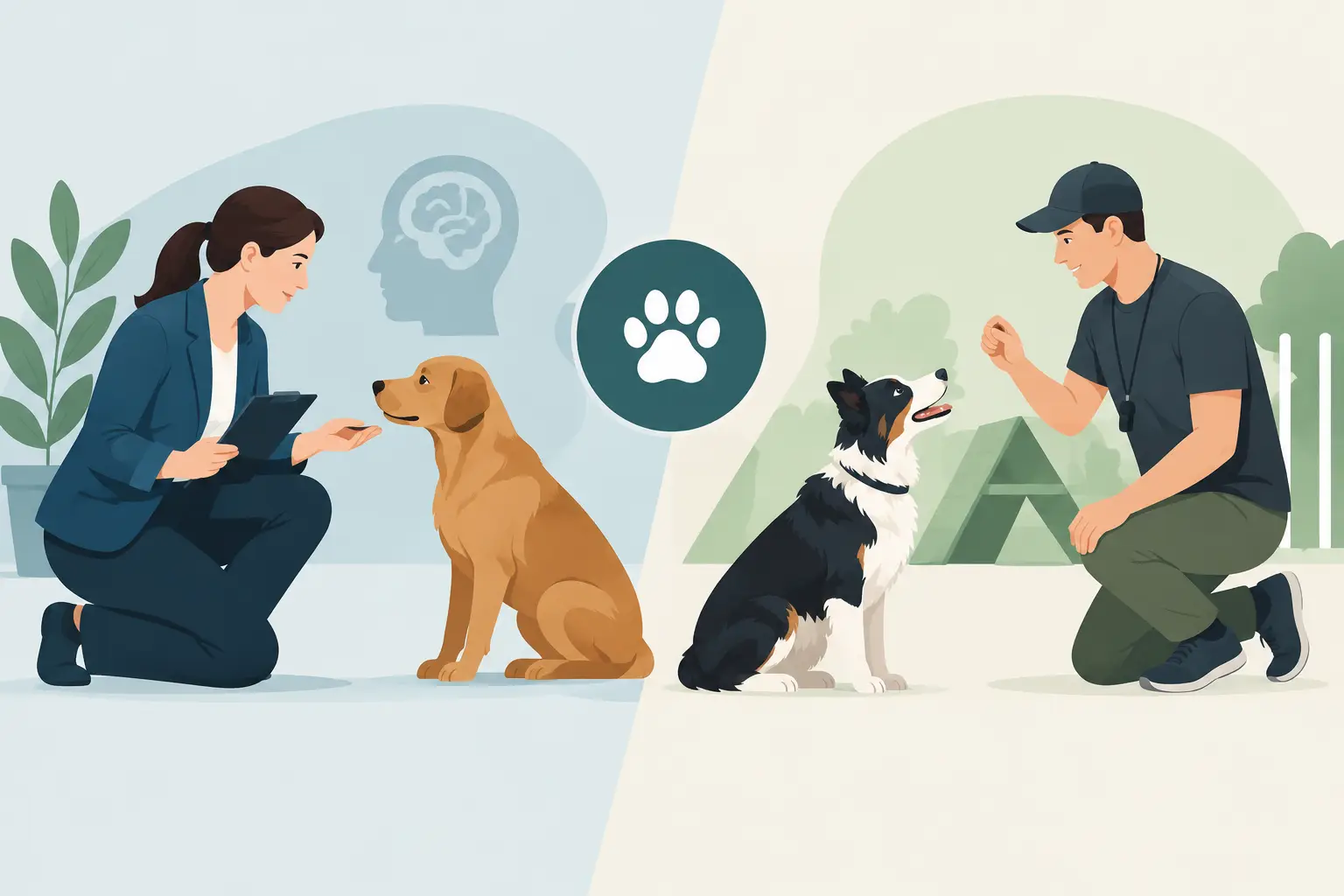
A dog trainer usually helps dogs and their people learn practical skills. This may include loose-lead walking, recall, settling on a mat, polite greetings, reliable cues and building confidence with everyday handling. Good training gives owners clear ways to practise with their dog between sessions.
Training can be especially useful for a puppy learning about the world, an adolescent dog who has discovered the excitement of ignoring their recall, or an adult dog who needs to brush up on household manners. A thoughtful trainer will adapt exercises to the dog in front of them, use rewards the dog genuinely enjoys and progress at a pace the dog can cope with.
The title ‘dog trainer’ is not protected in the UK, however. This means experience, knowledge and methods can vary widely. Before booking, it is sensible to ask about qualifications, professional memberships, experience with your dog’s needs and, importantly, the methods used. A force-free trainer focuses on teaching desired behaviour through reward-based learning rather than using fear, pain or intimidation.
What does a canine behaviourist do?
A canine behaviourist looks beyond the visible behaviour to explore why it is happening. Barking, lunging, hiding, guarding food or refusing to walk can be a dog’s way of communicating worry, frustration, discomfort, fear or a need for more space. The outward behaviour matters, but it is only part of the picture.
A behaviour consultation commonly considers the dog’s history, health, routine, environment, relationships, triggers and body language. It may involve detailed questions before meeting the dog, so that advice is built around their whole life rather than a single difficult moment.
For example, a dog who reacts to other dogs on lead may not need to ‘socialise more’. They may be overwhelmed by close approaches, worried about being unable to move away, or physically uncomfortable. A behaviourist can help identify patterns, reduce pressure and create a realistic plan that supports emotional wellbeing alongside practical skills.
Where pain or illness could be contributing, an ethical behaviourist will recommend a veterinary check. Behaviour change is rarely straightforward when a dog is uncomfortable. Collaboration with a vet, and where appropriate other qualified professionals, protects the dog’s welfare and gives the plan a better chance of working.
Behaviourist versus dog trainer: the key difference
The simplest distinction is that training tends to focus on teaching skills, while behaviour work investigates and supports the emotions, experiences and circumstances behind a behaviour. In practice, there is often overlap. Behaviour plans include training, and skilled trainers need a sound understanding of canine body language and welfare.
The more useful question is not which title sounds best. It is whether the person has the appropriate knowledge for your dog’s situation, works within their competence and uses kind, evidence-informed methods.
A straightforward recall issue in an otherwise relaxed, sociable dog may be well suited to a trainer. A dog who is panicked by visitors, snaps when touched, guards items, reacts intensely on walks or cannot settle when left alone may benefit from behaviour-led support. If you are unsure, describe the full situation when you enquire. A responsible professional should be honest about whether they are the right fit.
When a dog may need behaviour support
A behaviourist is often a sensible first point of contact when a behaviour is causing distress, risk or significant disruption to daily life. This can include fearfulness around people or dogs, lead reactivity, noise sensitivity, separation-related distress, guarding, handling concerns and sudden changes in temperament.
It is also worth seeking support when the behaviour feels out of character. A previously sociable dog who starts growling when approached, or a dog who suddenly avoids walks, may be communicating that something has changed. Do not punish the warning signs. Growling, barking and moving away are valuable communication, and suppressing them can leave a dog with fewer safe ways to express discomfort.
Early support can make a real difference, but there is no shame in asking later. Owners are often given conflicting advice, particularly when living with a reactive or anxious dog. You do not need to have all the answers before reaching out. Clear observations about when the behaviour happens, what comes before it and what helps your dog recover are a useful starting point.
Why methods matter as much as qualifications
Dogs learn through consequences, but that does not mean they need harsh corrections to learn. Force-free, reward-based work aims to make safe choices easier and more rewarding, while changing the situations that leave a dog struggling.
This does not mean allowing a dog to practise unwanted behaviour without support. Management is an important part of humane behaviour care. It might mean choosing quieter walking routes, using distance from triggers, putting food away before visitors arrive, or giving a dog a peaceful space during busy family times. Management prevents repeated stress while new skills and confidence are built.
Be cautious of promises to fix a dog quickly, claims that a dog is trying to dominate you, or advice that relies on frightening, pinning, flooding or physically correcting them. These approaches may stop a behaviour in the moment, but they do not necessarily resolve the feeling behind it. For fearful or reactive dogs, added pressure can make the problem worse.
Good support should leave both you and your dog feeling more understood. Progress may be gradual, with setbacks when life becomes busy or a situation is particularly challenging. That is normal. A realistic plan recognises the dog in front of you rather than expecting perfect behaviour on a timetable.
Choosing the right professional for your dog
Start by being specific about what you need. If your main goal is reliable everyday skills, look for a trainer whose approach suits your dog and whose sessions include support for you as the handler. If your dog is frightened, reactive or showing concerning behaviour, ask whether the professional is qualified and experienced in behaviour cases.
Ask how they assess dogs before starting, what methods they use, how they involve your vet when needed, and what follow-up support is available. It is reasonable to ask for credentials and professional accreditation. You are trusting someone with an important member of your family.
For ongoing dog walking, these questions matter too. A walker may spend more time with your dog each week than many visitors do. Dogs who are anxious, fearful or reactive need care that respects their threshold, reads their body language and does not force interactions for the sake of a group walk or a photograph.
At Hilltop Hounds, care is led by a PPGBI-accredited canine behaviourist with a Level 4 Advanced Canine Behaviour qualification. Each new client journey includes individual dog information, clear agreements and emergency veterinary authorisation, because compassionate care is also organised care. This is particularly reassuring when a dog needs extra patience, predictable handling and a walker who understands that progress is not always linear.
The right help should feel practical and kind
Whether you work with a trainer, a behaviourist or both, you should come away with advice you can use in real life. It should account for your schedule, home, family and dog’s individual limits. A plan that only works in a quiet training field is not much help on a rainy Tuesday morning before work.
The best professional relationship is collaborative. You know your dog’s everyday life; the professional brings trained observation, experience and a structured plan. Together, you can make walks, visitors, handling and home life feel safer and more manageable - one kind, achievable step at a time.

