
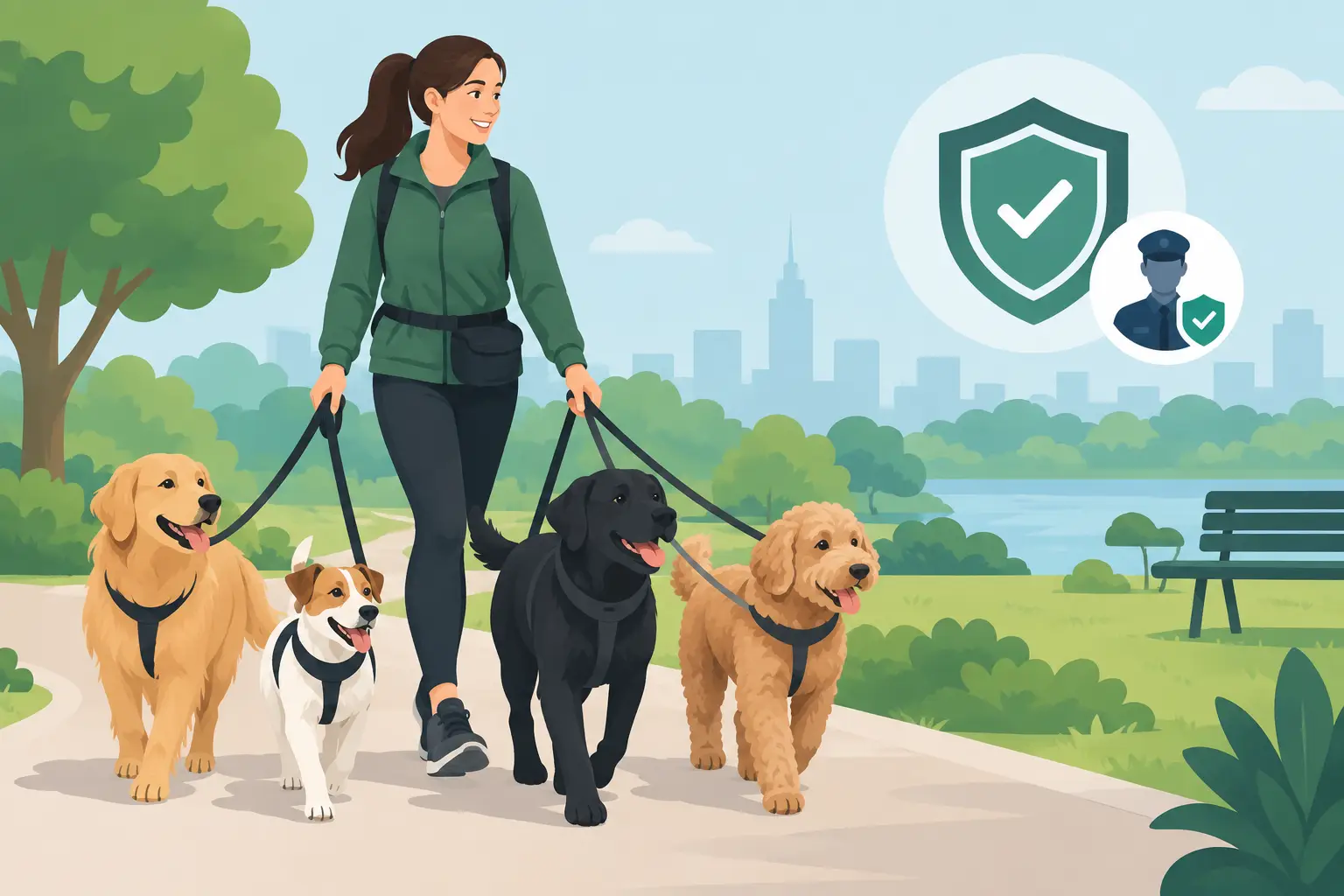
Handing your house keys, garden access and beloved dog to somebody else takes trust. Choosing a DBS checked dog walker is one practical way to build that trust, but it should be the beginning of your checks, not the end of them. The right walker will combine clear safeguarding with reliable communication, suitable insurance and a genuine understanding of your dog as an individual.
For busy households in Bromsgrove, a dog walker can become an important part of the week. They may see your dog when you are at work, spot small changes in their mood or routine, and help make each day feel calmer and more manageable. That responsibility deserves care, professionalism and a process that puts your dog's welfare first.
What does DBS checked mean for a dog walker?
DBS stands for Disclosure and Barring Service. A DBS check provides information about an individual's criminal record, at the level of check they are eligible for. For many self-employed dog walkers, this will be a Basic DBS check, which shows unspent convictions and conditional cautions.
It is a meaningful reassurance because it shows the walker has taken a sensible step towards transparency. They are willing to provide a formal trust signal rather than simply asking you to take their word for it. When a professional may be collecting your dog from home or caring for them without you present, that matters.
However, a DBS certificate is not a guarantee that someone will always make good decisions, communicate well or understand dogs. It is also a snapshot in time, rather than a permanent badge of suitability. Ask when the check was issued and feel comfortable asking to see it. A reputable walker should understand why you are asking and respond openly.
DBS checks are also only one part of safeguarding. A thoughtful provider will have clear arrangements for key holding, access instructions, collection and drop-off, incident reporting, emergency contacts and veterinary treatment. These everyday details are where dependable care is demonstrated.
Why a DBS checked dog walker is only one part of the picture
A background check can help you feel more secure about who is entering your home. It cannot tell you whether your dog will be walked in a way that feels safe, kind and appropriate for their needs.
This is especially relevant for dogs who are anxious, fearful or reactive. A dog may look perfectly sociable in a photo, yet find busy pavements, unfamiliar people, other dogs or sudden noises overwhelming. A walker needs to read the signs before a dog reaches their limit: slowing down, scanning, lip licking, turning away, stiffening, refusing to move or becoming unusually quiet.
A behaviour-led dog walker plans around those needs instead of expecting the dog to cope with a one-size-fits-all walk. That could mean quieter routes, carefully timed outings, more space from other dogs, shorter sessions while trust develops, or enrichment at home on days when the outside world feels too much. The aim is not simply to tire a dog out. It is to help them feel safe while meeting their physical and emotional needs.
Force-free, reward-based handling is central to this. Dogs learn best when they are given clear choices, rewarded for behaviours we want to see more of, and supported rather than punished when they are struggling. Harsh corrections may appear to stop a behaviour in the moment, but they can add fear and make a difficult situation worse.
Questions worth asking before you book
A professional dog walker should welcome questions. You are not being difficult by asking them. You are making an informed decision for a family member who cannot explain if something has gone wrong.
Start with the practical foundations. Ask whether they are DBS checked and insured, what their insurance covers, and how they secure dogs during travel if transport is part of the service. Find out what happens if they are delayed, unwell or faced with unsafe weather. A clear answer is more reassuring than a vague promise that they will “sort something out”.
Then ask about your dog. How will the walker learn about their routine, health, triggers, recall, lead handling, feeding restrictions and preferences? Do they use a dog-specific intake form? Will they meet your dog before the first walk? Are walks individual or in groups, and how are compatible dogs selected?
For owners of reactive or worried dogs, it helps to be direct. Explain what your dog finds hard, what has helped previously and what you need the walker to avoid. Ask how they manage encounters with other dogs, whether they use force-free methods, and when they would decide a walk is not suitable that day. There is no single answer that fits every dog, but there should be a calm, realistic plan.
Finally, ask about emergencies. A responsible provider should collect veterinary details, have an emergency contact process and ask you to complete veterinary authorisation before care begins. In an urgent situation, those preparations reduce delays and give the walker clear permission to act in your dog's best interests.
The value of a proper intake and agreement
Good dog care starts before the lead is clipped on. A detailed intake is not unnecessary paperwork. It is how a walker learns the small but vital details that make care safer: whether your dog bolts through doors, dislikes being touched around their harness, has medication, guards food, panics in rain or needs distance from cyclists.
It also gives you an opportunity to share what makes your dog happy. Perhaps they love a slow sniff around the park edge, a scatter of treats in the grass, a particular toy after a walk or a quiet settle before you return home. These details help turn a basic service into care that respects your dog’s personality.
A client agreement should set out the practical boundaries too. It may cover cancellations, access arrangements, payment, weather, group walks, illness and how concerns will be communicated. Clear terms protect both sides. You know what to expect, and the walker has the information and permission needed to carry out their role responsibly.
At Hilltop Hounds, this structured approach sits alongside compassionate, behaviour-led care. James Grant is a PPGBI-accredited canine behaviourist with over 15 years of experience and a Level 4 Advanced Canine Behaviour qualification. That expertise is particularly valuable when a dog needs patience, space and thoughtful handling rather than pressure to fit a standard walking routine.
Trust is built on communication, not certificates alone
A DBS certificate may help you choose a provider initially, but ongoing trust comes from what happens after the first booking. You should know whether your dog has been walked, eaten, toileted, rested or seemed unsettled. You should feel able to raise a question without being made to feel fussy.
The best communication is honest rather than overly polished. If your dog was nervous near a roadworks lorry, pulled towards a squirrel, or needed a shorter walk because they seemed tired, that information is useful. It helps everyone notice patterns and make better decisions next time.
Reliability matters here too. Consistent collection times, clear updates and prompt notice of changes can be particularly helpful for dogs who thrive on routine. For neurodivergent owners, clear written processes and predictable communication can also remove unnecessary uncertainty. Care should feel organised without becoming impersonal.
Choosing care that suits the dog in front of you
A DBS check, insurance and professional paperwork are strong foundations. Add behaviour knowledge, force-free handling, emergency planning and open communication, and you have a much clearer picture of whether a walker is right for your dog.
Not every dog needs specialist behaviour support, and not every owner needs the same level of contact. But every dog deserves to be handled with patience and respect. Take the time to ask questions, share the details that matter and choose someone who sees a walk as more than a job to complete. The right person will help your dog feel understood long after the front door closes.

