




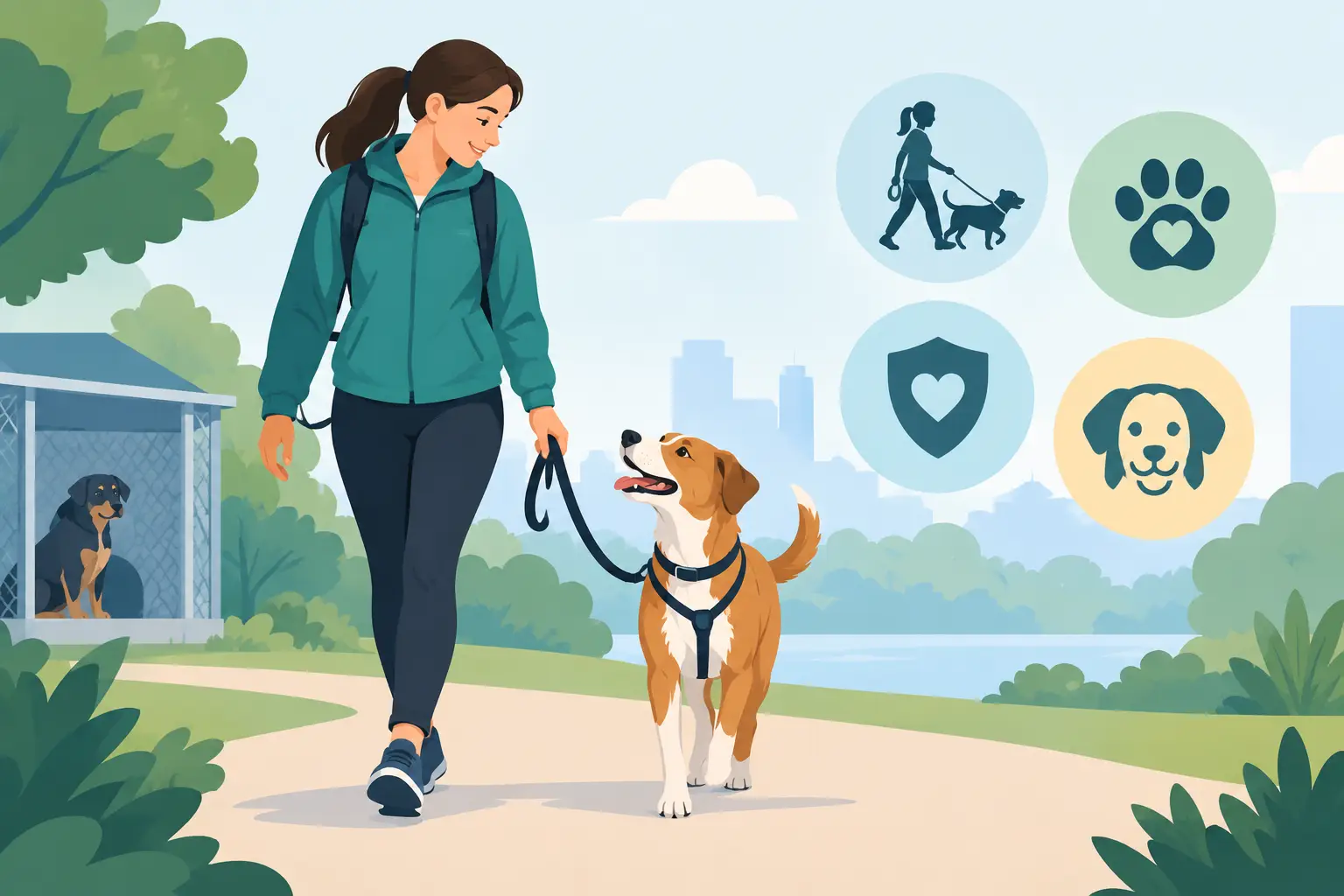
A rescue dog may arrive in your home with a story you only partly know. They might be delighted by every new person, or worried by a bin lorry, a close approach from another dog, or the sound of a lead being picked up. Finding a dog walker for rescue dogs is therefore about much more than filling a gap in the working day. It is about choosing someone who will notice what your dog is communicating and respond with patience.
For many owners, reliable daytime walks are essential. But reliability should not mean rushing a dog through a route, expecting them to cope with busy situations, or treating fear as disobedience. The right support gives your dog safe exercise while respecting their individual history, body language and pace.
Why rescue dogs can need a different approach
Not every rescue dog is anxious, reactive or fearful. Many settle quickly and enjoy regular group walks, new places and meeting people. Others need longer to feel secure, particularly during the early weeks or months in a new home. Their behaviour may change as they become more settled too, which can surprise owners who thought they had already worked out what their dog needed.
A dog who freezes at a gate, pulls away from an unfamiliar person or barks at another dog is not necessarily being difficult. They may be overwhelmed, uncertain, frustrated or trying to create space. A considerate walker looks beyond the behaviour itself and asks what the dog may be feeling, what has happened just before it, and how the next walk can be made more manageable.
This matters because a walk is not simply physical exercise. For a rescue dog, it can either build confidence through predictable, positive experiences or add to their stress if they are repeatedly pushed beyond what they can cope with.
What to look for in a dog walker for rescue dogs
A good first conversation should feel calm rather than sales-focused. The walker should want to hear about your dog as an individual: how long they have been with you, what they enjoy, what worries them, their health needs, handling preferences and any known triggers. If you do not have every answer, that is completely normal. A thoughtful professional will work with the information available and continue to observe your dog.
Behaviour knowledge, not just dog experience
Someone can love dogs and still lack the knowledge to support a fearful or reactive one safely. Look for relevant behaviour qualifications and a clear understanding of canine body language. Ask how they respond when a dog shows discomfort, such as turning away, lip licking, stiffening, slowing down or barking.
The answer should centre on distance, choice and reducing pressure, not on forcing compliance. A walker who uses force-free, reward-based methods will aim to help your dog feel safer, rather than correcting them for expressing that they are struggling.
At Hilltop Hounds, walks are led by James Grant, a PPGBI-accredited canine behaviourist with over 15 years of experience and a Level 4 Advanced Canine Behaviour qualification. That specialist knowledge is especially valuable when a dog needs more than a standard walk around the block.
A realistic plan for the environment
The best route for one dog may be entirely wrong for another. A sociable, confident dog may enjoy a varied walk with plenty to sniff and explore. A dog who finds other dogs difficult may need quieter times, more space, a different route or solo care while their confidence is supported.
Be wary of promises that every dog will be socialised, off lead or mixed into a group quickly. Progress cannot be guaranteed on a timetable. For some rescue dogs, success looks like calmly watching another dog pass from a comfortable distance. For others, it might mean choosing to sniff a hedge rather than scanning the street for danger.
A professional should be able to explain how they manage unexpected situations, including narrow pavements, loose dogs, traffic and a dog becoming distressed. Planning is not pessimistic. It is what allows walks to remain as safe and enjoyable as possible.
Consistency and clear communication
Rescue dogs often benefit from predictable routines. This does not mean every walk must be identical, but it does mean that handling, expectations and communication should be consistent. Regularly changing walkers, walking times or group combinations can be difficult for a dog who is still learning that their new life is safe.
Ask how updates are shared and what information you will receive after walks. A useful update goes beyond saying that your dog has been out. It might mention where they walked, what they enjoyed, whether they seemed relaxed, any changes in toileting or appetite observed during care, and anything worth monitoring.
Communication should also work both ways. If your dog has had a difficult night, a vet appointment, visitors at home or a change in medication, your walker needs to know. Small details can make a significant difference to how a dog copes that day.
Questions worth asking before you book
You do not need to interrogate a potential walker, but a few direct questions can reveal whether their approach suits your dog. Ask whether they offer a meet and greet or assessment, how they decide which dogs can walk together, and what they do if a dog is uncomfortable around people or other dogs.
It is also sensible to ask about lead handling, transport where relevant, recall expectations and whether off-lead exercise is ever used. For a rescue dog, off-lead time should never be assumed. Secure exercise areas, long lines and lead walks can all be appropriate depending on the dog, their recall, their history and the environment.
Practical safeguarding matters too. Check that the business is fully insured and DBS checked, and ask about emergency procedures. A responsible provider should have clear client agreements, detailed dog-intake information and emergency veterinary authorisation in place. These processes may feel administrative, but they protect your dog when quick decisions are needed.
How a careful introduction should work
The first meeting is not a test your dog must pass. It is an opportunity for the walker to learn about them without pressure. Some dogs will approach straight away; others may prefer to watch from a distance, sniff nearby or ignore the new person entirely. All of these responses can be valid.
A force-free introduction respects the dog's choice. The walker may avoid direct staring, allow your dog space, use treats only if appropriate and let trust develop at the dog's pace. If your dog is wary, several short, low-pressure visits may be better than expecting an immediate handover and full walk.
The first few walks should provide useful information. Is your dog comfortable leaving the house with the walker? Do they settle after a few minutes? Are there particular places, sounds or encounters that change their behaviour? The plan can then be adjusted. Sometimes the kindest option is a shorter, quieter walk while the relationship and routine develop.
Avoiding common misunderstandings about rescue dogs
Owners are sometimes told that a nervous dog simply needs more exposure to what frightens them. In reality, exposure without enough distance, control and positive association can make a fear stronger. A dog who is repeatedly taken close to another dog until they bark may be practising distress, not learning confidence.
Likewise, food rewards are not bribery. Used thoughtfully, they help create positive associations and give a dog information about what is safe and worthwhile. But treats are not a cure-all. If a dog is too worried to eat, that is valuable feedback that the situation may be too challenging.
It is also helpful to separate progress from perfection. Your rescue dog does not need to greet every person, play with every dog or walk happily through the busiest part of town to have a good life. Their needs may change with time, training, health and maturity. A good walker will adapt with them rather than holding them to a fixed idea of what a dog should be.
Choosing care that gives you peace of mind
You know your dog better than anyone, and your instincts matter. If a walker dismisses your concerns, talks about dominance, or suggests your dog needs to be made to get used to frightening situations, it is reasonable to keep looking. Compassionate care should never ask you to ignore what your dog is showing you.
The right person will balance kindness with organisation: a detailed intake, transparent terms, thoughtful walk planning, dependable communication and a clear emergency process. Most importantly, they will see your rescue dog as an individual, not a problem to solve.
A well-matched walker can become a steady, reassuring part of your dog's week. Give that relationship time to grow, keep sharing what you notice at home, and let your dog's comfort guide the pace.

