A walk that looks ordinary from across the road can feel enormous to a sensory sensitive dog. A bin lorry reversing, a child on a scooter, the rattle of a gate or the smell of another dog can arrive all at once. Dog walking for sensory sensitive dogs is not about making them “get used to it” by pushing through. It is about noticing what their body is telling us, then giving them enough space, choice and support to feel safer.
Some dogs are sensitive to sound, movement, touch, smell or visual activity. Others find busy environments difficult because they are anxious, fearful, reactive, in pain, overtired or simply coping with more than they can comfortably process. The label matters less than the individual dog in front of you. What matters is creating walks that protect their welfare while still meeting their need to sniff, move, explore and decompress.
What sensory sensitivity can look like on a walk
Sensory sensitivity does not always look dramatic. A dog may bark or lunge when overwhelmed, but they may also freeze, walk very slowly, pull towards home, scan constantly, shake off repeatedly, refuse treats they normally enjoy or become unusually quiet. Some become more excitable after a difficult walk because their stress has nowhere obvious to go.
Owners are sometimes told their dog is being stubborn, naughty or badly socialised. That can be a painful and unhelpful interpretation. Behaviour is communication. If a dog suddenly avoids a familiar route or reacts to a sound they previously managed, it is worth paying attention rather than asking for more compliance.
A change in tolerance can also have a physical cause. Ear problems, skin discomfort, joint pain, gastrointestinal upset and changes in vision can all make the outside world harder to handle. If sensitivity is new, escalating or paired with changes in appetite, sleep, mobility or toileting, speak with your vet. A behaviour-led plan works best when health needs are considered too.
Dog walking for sensory sensitive dogs starts before the lead goes on
The calmest walks are often prepared at home. Rushing to clip on the lead, finding shoes while the dog is already pacing, then stepping straight into a noisy street can use up a large part of their coping capacity before the walk begins.
Give your dog a predictable departure routine. This might mean putting their harness on in a quiet room, waiting for a softer body and loose breathing before leaving, or offering a few moments to sniff in the garden first. Predictability is not about rigid rules. It is about helping the dog understand what is happening next.
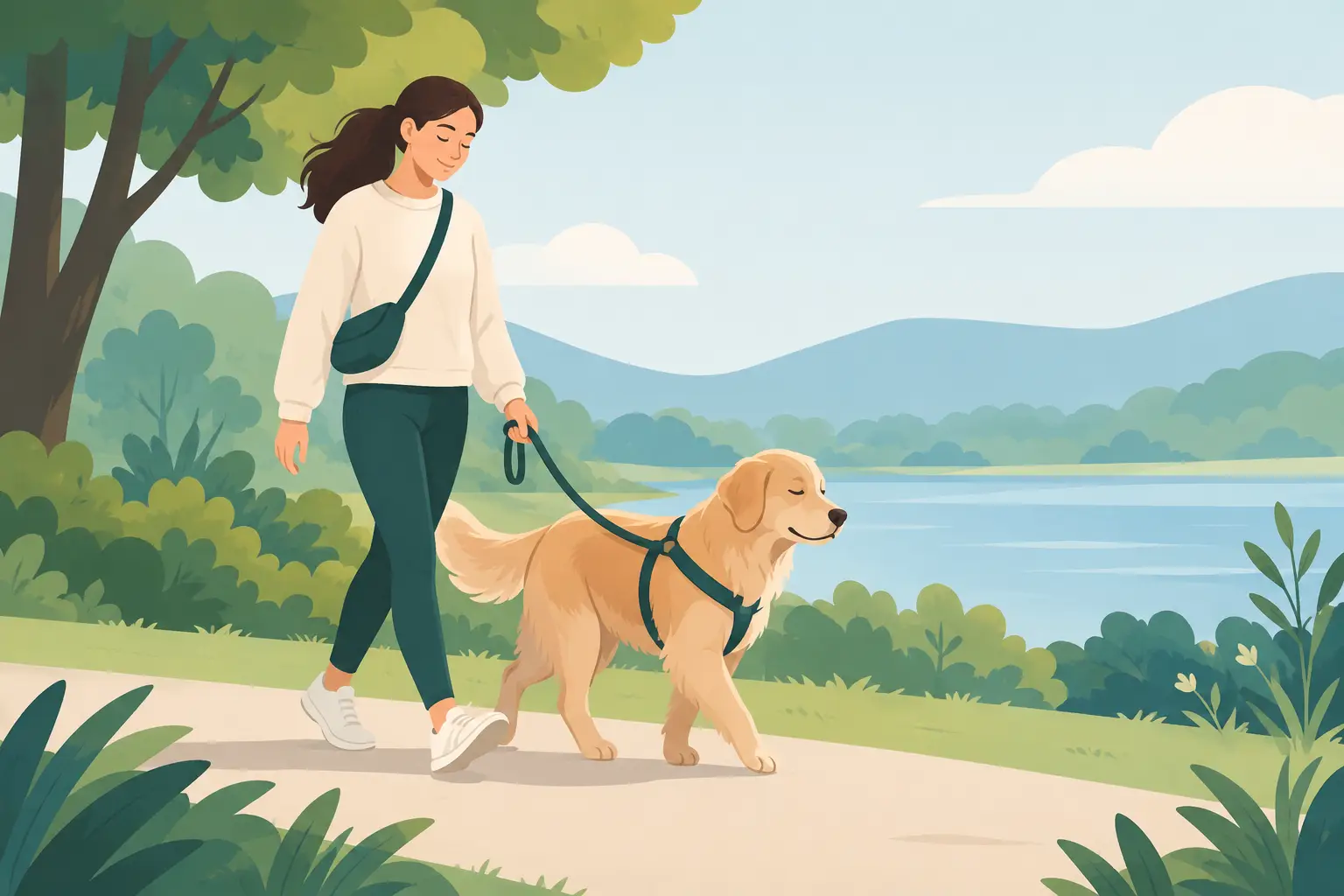
Equipment should be comfortable, correctly fitted and introduced kindly. Many sensitive dogs prefer a well-fitted Y-shaped harness because it allows freer shoulder movement and avoids pressure on the throat. However, every dog is different. If a dog dislikes having equipment placed over their head or touched near their ears, forcing the issue can turn getting ready into a daily worry. Taking time to build positive associations is often more valuable than buying another piece of kit.
It also helps to think about timing. A ten-minute walk at a quiet time can be more beneficial than a longer route during the school run, on bin collection day or when a nearby building site is active. Exercise matters, but calm movement, sniffing and the opportunity to make choices matter too.
Choose routes for recovery, not mileage
For a sensory sensitive dog, the best route is rarely the most scenic or ambitious one. Look for places with room to move away from people and dogs, softer surfaces, fewer blind corners and reliable escape options. A quiet residential loop, a broad footpath at an off-peak time or a low-traffic green space may be preferable to a busy park.
Try not to measure success by distance. A short walk where your dog sniffs, checks in with you and returns home able to settle is useful information. A longer walk that leaves them trembling, pulling, barking or unable to rest afterwards may have asked too much.
That does not mean avoiding every challenge forever. Complete avoidance can make daily life impractical, particularly in Bromsgrove and surrounding areas where roads, other dogs and everyday activity are part of the environment. The difference is between gradual, supported exposure and flooding. Gradual exposure keeps enough distance that the dog can notice something without feeling trapped by it. Flooding expects them to endure more than they can cope with, in the hope they will stop reacting.
If you see a trigger ahead, act early. Cross the road, turn down another path, step into a driveway or create a cheerful U-turn. Moving away is not a failure. It teaches your dog that you listen when the environment feels too much, and that trust can make future walks easier.
Let sniffing set the pace
Sniffing is not wasted time. It gives dogs information, provides mental activity and can help them move through an environment at a pace that feels manageable. Where it is safe to do so, allow pauses at grass verges, hedges and the edges of paths rather than continually asking your dog to march on.
Some dogs benefit from a “sniffari” walk with no destination beyond calm exploration. Others prefer a familiar route with brief sniff breaks because too much novelty is tiring. Watch the dog rather than following a rule. Loose movement, a softer face and a willingness to explore generally suggest the pace is workable.
Use force-free support when the world gets loud
Force-free walking does not mean having no boundaries or allowing a dog to rush into situations that worry them. It means teaching and guiding without fear, pain or intimidation. For sensory sensitive dogs, this is especially significant: harsh corrections can add another frightening sensation at the exact moment a dog is already overwhelmed.
Reward-based methods can be simple. When your dog spots something at a comfortable distance, calmly acknowledge it and offer a treat if they can take one. When they choose to look back at you, move away with you or sniff instead of escalating, let that choice lead to safety or something pleasant. Food is not a bribe. Used thoughtfully, it helps build a more positive emotional association and gives the dog clear information about what works.
Treats are not always appropriate in the moment. A dog who will not eat may be too worried, too close to a trigger or simply not hungry. In that case, create more distance rather than repeatedly presenting food. Space can be the most meaningful reward.
Keep your own body language quiet and practical. Tightening the lead, holding your breath or repeating commands quickly can travel down the lead and add pressure. A steady voice, a loose lead where safe, and a plan to leave the situation are often more useful than asking for a perfect sit beside a passing dog.
Build a walking plan around the whole dog
Sensory needs can change from day to day. Poor sleep, visitors at home, warm weather, a busy morning or several demanding events in a row can lower a dog’s tolerance. This is why a good walking plan is flexible rather than fixed.
Keep a simple note of what happened on walks for a week or two. Record the route, time, weather, notable sounds or encounters, your dog’s responses and how they settled afterwards. Patterns often emerge. Perhaps the dog copes well with cyclists but finds children leaving school difficult, or perhaps their reaction is strongest after they have already passed several dogs.
Balance walks with quieter enrichment at home. Scatter feeding in the garden, a food puzzle, safe chewing, scent games or a calm training session can meet needs without adding more stimulation. This is not a replacement for all walks, but it can reduce the pressure to make every outing long or eventful.
For some dogs, walking alone is the kindest option. Group walks can be enjoyable for social, resilient dogs, yet they can be too unpredictable for a dog who needs distance and careful pacing. Individual care allows the route, timing, handling and level of interaction to be shaped around that dog’s needs.
When specialist support makes a difference
If walks regularly end in panic, reactivity or shutdown, professional support can help you move from guesswork to a clear plan. Choose someone who asks detailed questions about your dog’s health, history, triggers, handling preferences and daily routine. Responsible care should include dog-specific intake information, clear agreements and emergency veterinary authorisation, not just a quick handover at the front door.
A qualified, force-free professional can assess whether a walk should focus on confidence building, decompression, management around known triggers or a combination of these. They should be honest about trade-offs too. A quieter route may involve travelling slightly further; shorter walks may be needed while skills are being built; and progress is rarely a straight line.
At Hilltop Hounds, behaviour-led care is shaped around the individual dog, with patience for anxious, fearful and reactive dogs who need extra understanding. Led by a Level 4 Advanced Canine Behaviour-qualified, PPGBI-accredited practitioner, the service uses reward-based methods and thoughtful planning rather than one-size-fits-all group exercise. Being fully insured and DBS checked matters, but so does the day-to-day detail: reliable communication, careful records and a walker who notices when your dog is saying “this is too much”.
A sensory sensitive dog does not need to become the dog who loves every busy pavement, every unfamiliar person or every barking dog behind a fence. They need walks that feel safe enough to be curious. Start with the quietest version of success, protect their choices, and let confidence grow at their pace.

