The pavement can feel merely warm through your shoe while being painfully hot against a dog’s paw pads. Add a thick coat, excitement at seeing the lead, and limited ways to cool down, and a normal daytime walk can become unsafe surprisingly quickly. Dog walking in hot weather safety is not about being over-cautious or depriving your dog of enjoyment. It is about changing the plan before heat puts their welfare at risk.
For many dogs, especially those who are anxious, reactive, older, young, flat-faced, or carrying extra weight, a hot walk can be physically and emotionally overwhelming. A shorter, quieter outing at the right time is often kinder than trying to maintain a usual routine.
Why dogs struggle in the heat
Dogs do not sweat over most of their bodies as people do. They mainly regulate their temperature through panting, with small amounts of sweating through their paw pads. Panting is effective only up to a point. When the air is hot, humid, or still, they have less opportunity to release body heat and can overheat rapidly.
Exercise adds to that heat load. So does walking on sun-baked tarmac, excitement, stress, pulling on the lead, and travelling in a warm car. A dog who appears keen to go out is not necessarily coping well - many will continue walking despite discomfort because they are eager to explore or stay close to their person.
Some dogs need particular caution. Brachycephalic breeds, such as Pugs, French Bulldogs and Bulldogs, may have more difficulty breathing and cooling themselves. Puppies and senior dogs can be less resilient, while dogs with heart, airway, mobility, or neurological conditions may need an individual plan agreed with their vet. Dark or dense coats can also absorb more heat, although every dog’s tolerance is different.
Dog walking in hot weather safety starts before the lead comes out
Check the forecast, but do not rely on air temperature alone. Humidity, direct sunshine, lack of breeze, and the heat retained by pavements and buildings can make conditions harder than the number suggests. In UK heatwaves, late afternoon can remain surprisingly hot even after the sun starts to lower.
The simplest adjustment is timing. Walk early in the morning, before paths and roads have had time to heat up, or wait until late evening when surfaces have properly cooled. If neither option is safe or practical, skip the outdoor walk. Missing one walk is far safer than risking heat stress.
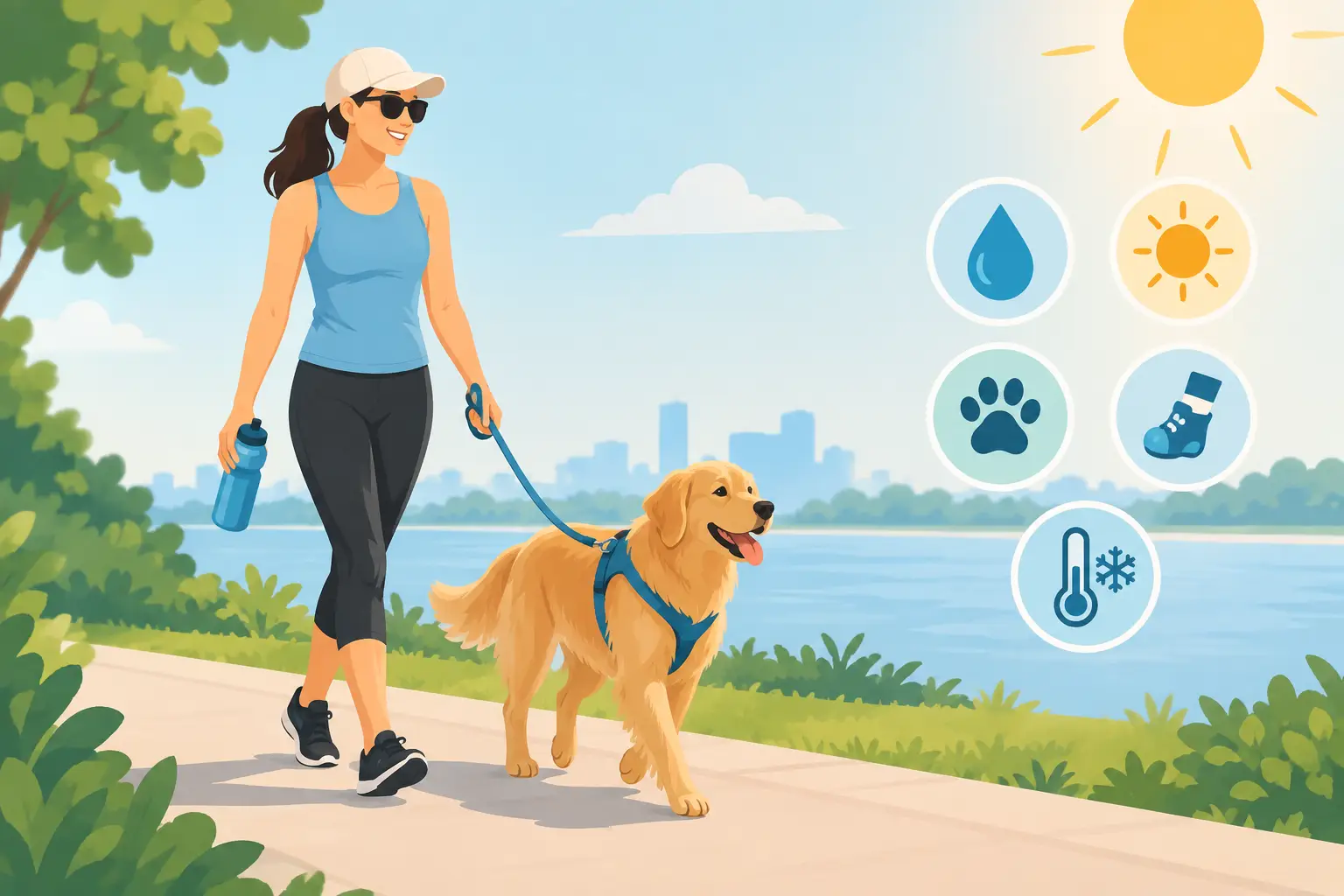
The hand test is a useful starting point: place the back of your hand on the pavement for seven seconds. If it is uncomfortable for you, it is too hot for paws. This is not a perfect test, as surfaces vary, but it encourages a sensible pause before setting off. Tarmac, paving slabs, artificial grass, sand, and metal drain covers can all become much hotter than the surrounding air.
Choose shade and soft ground where possible. A short toilet break on grass beneath trees is very different from a brisk route beside busy roads with little cover. Avoid making your dog work hard in the heat: no jogging, cycling alongside them, long lead games, intense fetch, or pressure to keep up with a usual walking group.
Water helps, but it is not permission to exercise in unsuitable conditions. Bring fresh water and a collapsible bowl for an essential outing, offer small drinks during and after the walk, and let your dog set a slower pace. Do not force water if they refuse it.
Let the dog in front of you set the pace
A behaviour-led approach looks beyond a route and a clock. Notice whether your dog is lagging, seeking shade, stopping frequently, panting more than usual, or becoming less responsive to familiar cues. These can be early signs that they need a break, a drink, or to head home.
Heat can also change behaviour. A normally sociable dog may be less tolerant of other dogs; a worried dog may find busy spaces or unexpected noises harder to manage when already physically uncomfortable. Giving them distance, choosing quieter routes, and removing the expectation to greet anyone protects both their wellbeing and their training.
For reactive, fearful, or anxious dogs, cooler walks are often an opportunity to make outings easier rather than simply shorter. Early mornings can be quieter, with fewer people, dogs, vehicles, and demands. Use reward-based support, allow sniffing where it is safe, and turn back before your dog becomes overwhelmed. There is no benefit in pushing through discomfort to complete a planned distance.
Know the warning signs of heat stress
Heatstroke is an emergency, and it can develop quickly. Heavy or frantic panting, excessive drooling, bright red or very pale gums, weakness, wobbliness, vomiting, diarrhoea, confusion, or collapse all require urgent action. A dog may also seem unusually quiet, reluctant to move, or unable to settle.
If you are concerned, stop exercise immediately and move your dog into a cool, shaded, well-ventilated area. Start cooling them with cool tap water over their body, including the underside, and use a fan if available. Do not use ice-cold water or cover them in wet towels, as these can interfere with heat loss. Offer drinking water if they are able and willing to drink, but do not force it.
Contact a vet straight away for advice and urgent assessment. Even if a dog seems brighter after cooling, internal effects can be serious and may not be obvious at first. It is always better to make the call.
Replace the walk, rather than simply cancelling it
Most dogs still benefit from gentle activity and opportunities to use their brain on hot days, but this does not have to happen outdoors. The goal is calm engagement, not tiring a dog out through exertion.
A few minutes of reward-based training, scent games around the house, a scatter feed in a cool room, or a stuffed food toy prepared safely for your dog can provide enrichment without raising their temperature. Let them rest between activities. Some dogs will prefer a quiet nap in the coolest part of the home, and that is a valid choice too.
If you have a garden, supervise outdoor time and make sure there is reliable shade and fresh water. Be mindful that gardens can become heat traps, particularly on patios and artificial grass. Paddling pools suit some dogs, but never pressure a dog to enter water, and supervise them closely at all times.
Make a clear plan with your dog walker
Professional care should be flexible when weather changes. Before hot spells arrive, share any health conditions, triggers, preferred cooling strategies, and signs that tell you your dog has had enough. Be clear about whether you are happy for a walker to replace a daytime outing with a brief toilet break and indoor enrichment when conditions are unsafe.
At Hilltop Hounds, individual dog information, client agreements, and emergency veterinary authorisation are part of caring responsibly, not just paperwork. A detailed intake helps ensure decisions are based on your dog’s needs, including their behaviour, health, handling preferences, and usual routine. A force-free professional should never treat a hot-day walk as something to be completed regardless of how the dog is coping.
It also helps to agree practical details in advance: where shade is available, whether your dog can safely travel in a cooled vehicle, what water they will drink from, and who should be contacted if concerns arise. Reliable communication gives everyone permission to make the safest call rather than feeling obliged to follow the original plan.
A gentler routine is still good care
Dogs do not measure love by mileage. On a hot day, the most caring choice may be a quiet morning sniff, a shady toilet break, a cooling rest at home, and some thoughtful enrichment later on. Pay attention to the conditions, trust the signals your dog gives you, and allow the routine to change. Their comfort is the plan.

