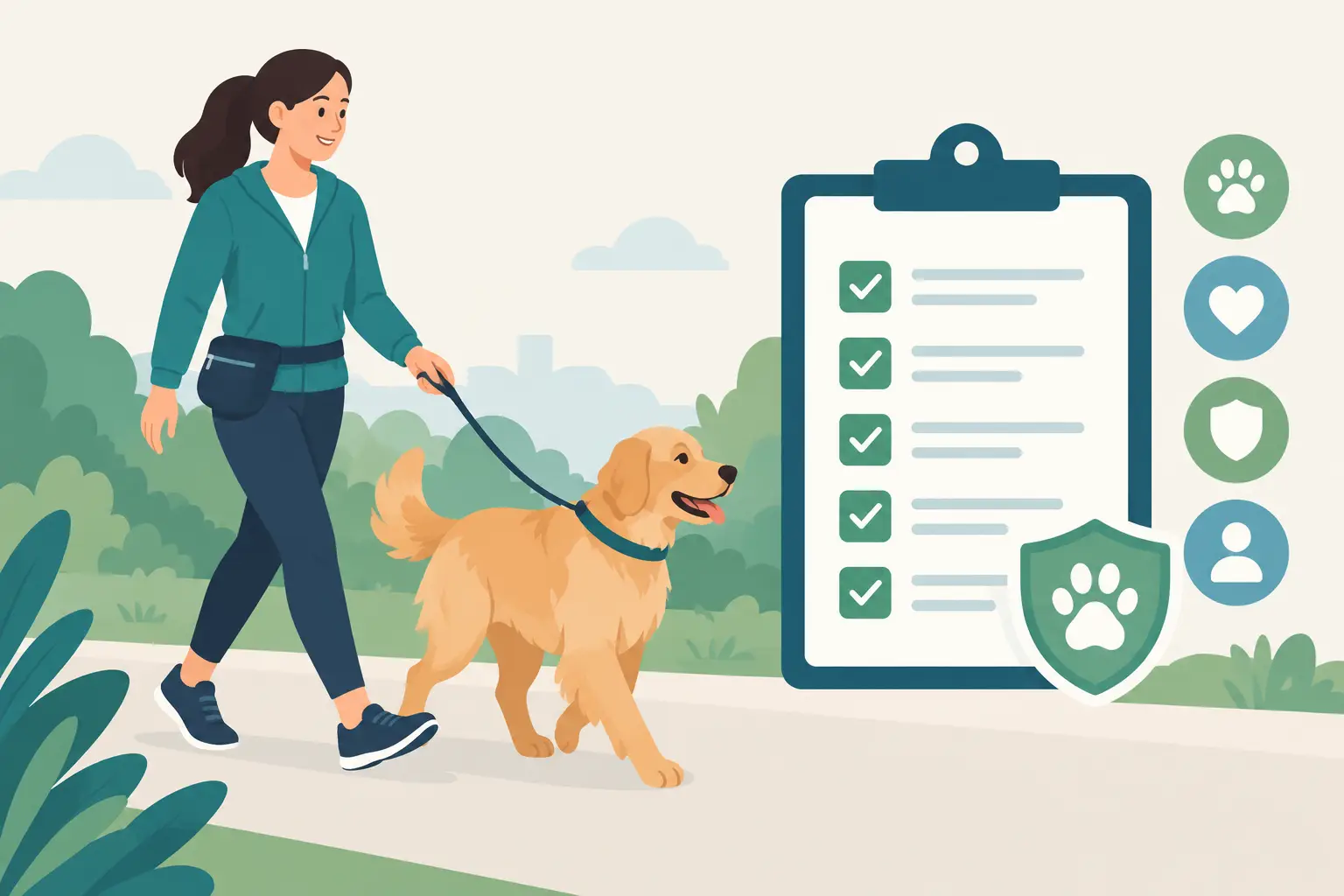
A good dog walking intake form checklist is not paperwork for paperwork’s sake. It is the first chance to make sure your dog is understood before anyone clips on a lead, opens a front door or heads out towards a busy Bromsgrove pavement. For dogs who are anxious, reactive, fearful or simply particular about their routine, those details can make the difference between a walk that feels safe and one that feels overwhelming.
A responsible dog walker should use intake information to build a clear picture of your dog as an individual. That means more than their age, breed and feeding time. It means knowing what helps them feel secure, what they find difficult, how they communicate discomfort and what to do if something goes wrong.
Why a dog walking intake form matters
Your dog cannot explain that they are frightened of umbrellas, uncomfortable around large boisterous dogs or likely to freeze when a lorry passes. Their behaviour may communicate it, but it is far kinder and safer when a walker has that context from the beginning.
An intake form gives owners a place to share information without judgement. It also creates a reliable written record, rather than relying on a hurried handover at the doorstep. This is particularly valuable when care is ongoing, when routines change, or when an emergency contact needs to be reached quickly.
For a behaviour-led service, intake is also the foundation for realistic planning. A dog who loves company may be suitable for carefully matched walks, while another may need quiet, individual routes and more space from other dogs. Neither option is better. The right choice depends on the dog in front of us.
Dog walking intake form checklist: the essentials
A thorough form should be clear enough to complete without feeling daunting, yet detailed enough for a professional to make safe decisions. These are the areas that should be covered.
Owner, contact and home details
Start with the practical information: the owner’s full name, address, preferred phone number and an alternative emergency contact. Include clear access arrangements, such as key-safe instructions, alarm details and who is authorised to collect the dog.
It is also helpful to record the usual household routine. Does your dog settle after you leave? Are they comfortable with a walker entering the home alone? Do they need a moment of calm before their lead goes on? Small details can prevent a rushed, stressful start to the visit.
Your dog’s basic profile
Record your dog’s name, date of birth or age, breed or type, sex, neuter status and microchip information. A recent photo is useful too, especially if a dog were ever to become lost.
The form should also ask about identification. Is the collar tag current? Do they wear a harness, a muzzle for safety, a coat or any other equipment? If a dog has a preferred lead attachment or an item that should never be used, that needs to be written down clearly.
Veterinary, health and emergency information
Health information is one of the most important parts of any intake process. Include your usual veterinary practice, the vet’s contact number, insurance details if applicable, known allergies, existing conditions, medication and recent injuries or surgery.
Your walker should know whether your dog has any handling sensitivities. For example, a dog with arthritis may struggle with stairs or be uncomfortable when their legs are touched. A dog recovering from illness may need a shorter, slower outing. Medication instructions should be specific, but a walker should only administer medication where this has been agreed and they are confident it can be done safely.
Emergency veterinary authorisation is equally important. If your dog needs urgent treatment and you cannot be reached, the walker needs written permission to seek veterinary attention. The form should set out the emergency contacts, preferred vet, any financial limits you wish to discuss, and confirmation that reasonable decisions can be made in your dog’s best interests.
Behaviour, handling and emotional wellbeing
This section deserves time and honesty. It is not about labelling a dog as difficult or embarrassing an owner. It is about giving your dog the support they need.
A useful form asks how your dog responds to unfamiliar people, children, dogs, cyclists, runners, traffic, wildlife, grooming, being touched, lead handling and separation. It should ask what early signs of stress look like for them. Some dogs bark and pull; others go quiet, stop moving, turn away or try to create distance.
Be specific about any bite history, snapping, guarding, escape attempts or situations where your dog has felt unsafe. This information allows a professional to put sensible management in place from day one. Hiding it can put your dog, the walker and the public at greater risk.
Force-free care does not mean ignoring difficult behaviour. It means responding with safety, distance, thoughtful handling and reward-based support rather than punishment or intimidation. For some dogs, a quieter route, a different time of day or a shorter walk is the kindest plan.
Walking routine and preferences
Dogs are creatures of habit, and their preferences matter. Note how long your dog usually walks, when they are happiest going out, whether they toilet before leaving home, and what pace suits them. Include the routes they enjoy, places to avoid and whether they can travel in a vehicle if that is part of the proposed service.
The form should make clear whether your dog may be walked with others, and under what conditions. Compatibility is not based on size alone. Energy levels, social confidence, play style and tolerance for proximity all matter. Some dogs thrive with a calm walking companion; others need one-to-one care to remain relaxed.
Recall and off-lead information must be accurate. If recall is inconsistent, a long line or secure enclosed area may be safer than off-lead access. No dog should be let off because an owner feels pressured to say yes. Safety and welfare come first.
Food, rewards and household rules
Ask what treats your dog can have, including allergies and foods they must avoid. For many dogs, food rewards support calm, cooperative handling, but not every dog can eat freely or take treats around other dogs.
It also helps to know the rules you follow at home. Is your dog allowed on furniture? Should they be towelled off after rain? Do they need water refreshed after a walk? Are there rooms or cupboards that must stay closed? Clear instructions help care feel consistent rather than unfamiliar.
Questions owners should ask before signing
A form works best as part of a wider conversation. Before booking, ask how your information will be used, who can access it and how updates should be shared. You should also understand the walker’s insurance, DBS status, emergency procedures, cancellation terms and whether they are trained to recognise signs of stress.
If your dog has behavioural needs, ask how the walker will assess suitability rather than assuming every service fits every dog. A thoughtful professional may recommend a gradual introduction, a solo walk or a different arrangement. That is not a rejection. It is evidence that your dog’s welfare is being taken seriously.
At Hilltop Hounds, this care planning is shaped by force-free, reward-based practice and behaviour knowledge, including support for dogs who need extra patience around anxiety, fear or reactivity. The aim is never to force a dog to cope. It is to create conditions where they can feel safer.
Keep the form current
An intake form is a starting point, not a document to file away and forget. Let your walker know if your dog starts medication, has an operation, moves house, changes vet, becomes less comfortable with handling or experiences a frightening incident on a walk.
Even positive changes matter. A young dog may become more confident, an older dog may need a gentler pace, or a new rescue may slowly reveal preferences that were not obvious at first. Regular updates allow care to change with your dog rather than expecting your dog to fit an old plan.
The best intake form leaves room for your dog to be an individual, not a set of boxes. Taking a few extra minutes to share the full picture gives a caring walker the information they need to make every outing calmer, safer and more enjoyable.

