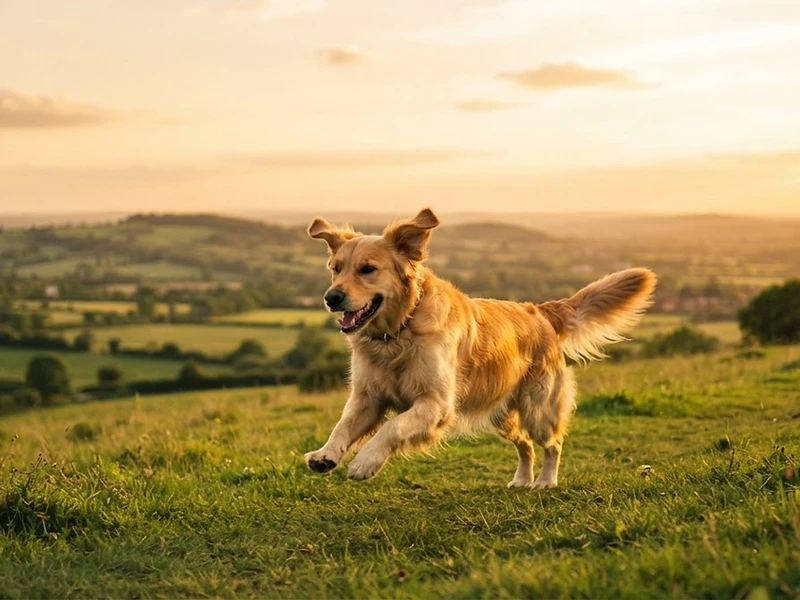
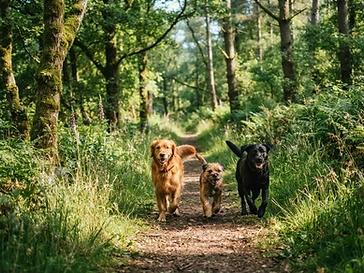

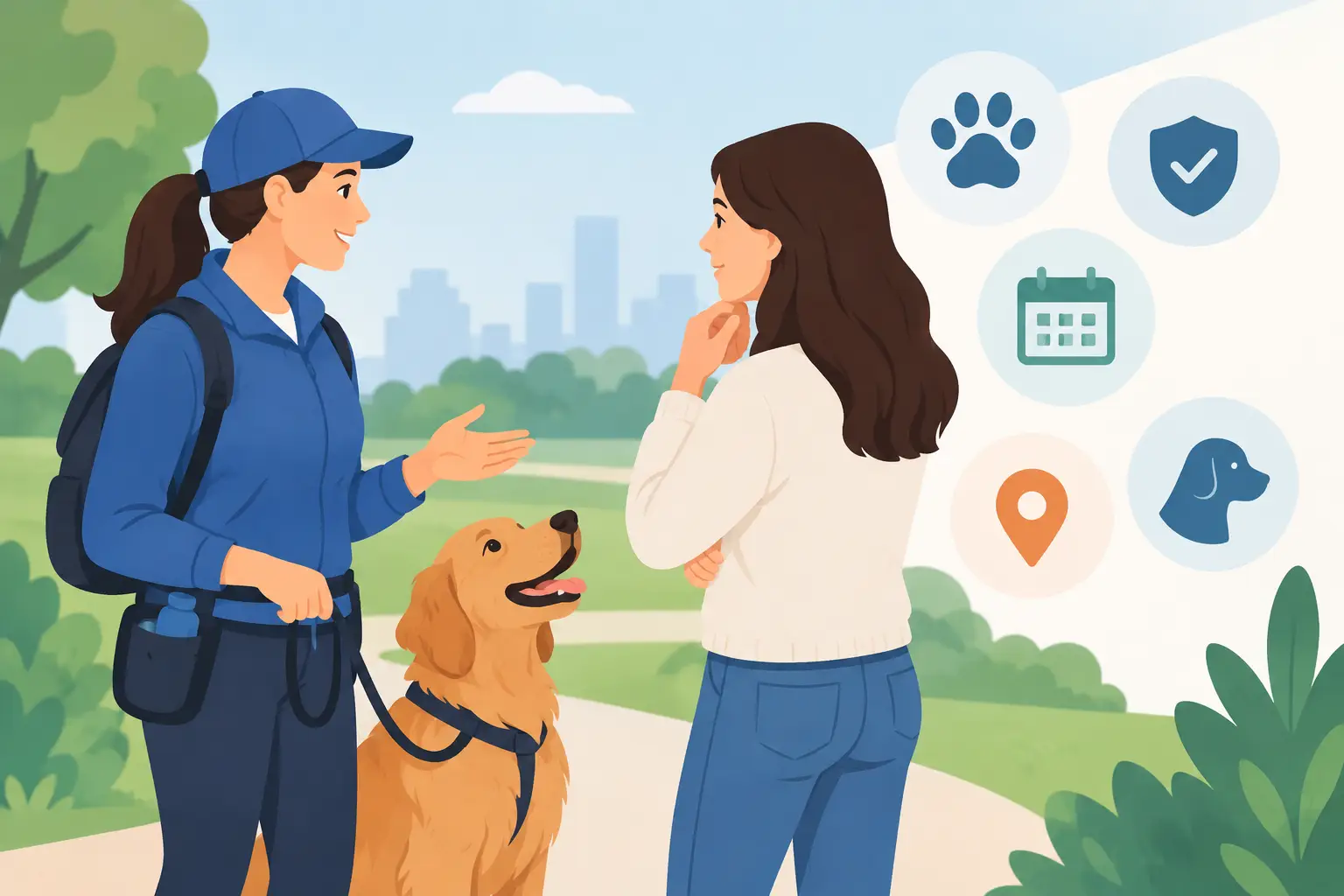
Handing over your house keys and trusting someone with your dog is a big step. The right questions to ask dog walker services are not about catching anyone out. They help you understand whether a person’s experience, methods and routines genuinely suit the dog you know best.
For some dogs, a friendly group stroll is ideal. For others, especially those who are anxious, fearful or reactive, the setting, handling and pace of a walk can make a real difference to how safe they feel. A professional walker should welcome thoughtful questions and answer them clearly, without making you feel demanding.
Questions to Ask a Dog Walker About Experience
What training and practical experience do you have?
Ask what the walker has studied, how long they have worked with dogs, and the types of dogs they regularly support. Experience matters, but so does its relevance. Someone may be excellent with confident, sociable dogs while having limited knowledge of dogs who struggle around traffic, other dogs or unfamiliar people.
If your dog has additional needs, be specific. Explain what triggers them, what helps, and what has been difficult in the past. Then ask how the walker would approach those situations. Look for calm, realistic answers rather than promises to "fix" a behaviour quickly.
A qualification in canine behaviour can be particularly reassuring where a dog needs more than a standard walk. At Hilltop Hounds, walks are led by James Grant, a PPGBI-accredited practitioner with a Level 4 Advanced Canine Behaviour qualification and more than 15 years of experience. That background supports a thoughtful understanding of body language, stress and individual thresholds.
What methods do you use if a dog is worried or reactive?
This is one of the most valuable questions to ask, whatever your dog’s history. A force-free, reward-based walker will focus on preventing a dog from becoming overwhelmed, creating distance from triggers where possible, and building positive associations at a pace the dog can manage.
Ask whether they use lead corrections, slip leads, prong collars, spray deterrents or intimidation. These methods can suppress visible behaviour without addressing the fear, frustration or discomfort beneath it. They may also make an already worried dog feel less safe.
A good answer should include management as well as training. It might mean choosing quieter routes, walking at less busy times, avoiding close greetings, or working on confidence in low-pressure environments. There is no single approach that suits every dog, and a professional should be comfortable saying so.
Will you meet my dog before the first walk?
A meet and greet allows everyone to assess whether the arrangement feels right. Your dog can meet the walker with you present, while the walker can learn about your dog’s routine, handling preferences and communication signals.
For a confident dog, this may be straightforward. For a nervous dog, the first meeting may need to be short and quiet, with no pressure to interact. It can take more than one introduction before a dog is ready to walk with a new person alone. That is not a failure. It is often the kindest route to a lasting, positive relationship.
Questions to Ask a Dog Walker About Daily Care
Will my dog be walked alone or with other dogs?
Neither option is automatically better. Some dogs love the social opportunity of a carefully matched small group. Others are happier walking alone, or with just one compatible companion. The key is that dogs are matched by temperament, play style, size, confidence and walking needs, not simply by which spaces are available.
Ask about the maximum number of dogs walked at once and how the walker decides who goes together. If your dog is reactive, elderly, recovering from injury, easily overexcited or frightened by other dogs, a solo walk may be the safest and most enjoyable option.
Where will you walk, and how do you choose routes?
A walker should be able to explain their usual walking areas and how they adapt routes when conditions change. Busy pavements, school-run traffic, livestock, off-lead dogs and poor weather can all affect a dog’s experience.
For a dog with behavioural needs, route planning is not just a convenience. Choosing space, predictable paths and quieter times can prevent repeated stressful encounters. Ask whether the walker has a plan if a route becomes unexpectedly busy or if another dog approaches off lead.
How long is the walk, including travel and collection?
Clarify what you are booking. A one-hour service may mean a full hour of walking, or it may include collection, drying muddy paws, settling your dog at home and travel between appointments. There is no right model, but it should be transparent.
Also discuss what is realistic for your dog. A young, energetic dog may enjoy a longer adventure, but more time is not always better. Puppies, senior dogs, brachycephalic breeds and dogs who become overstimulated may benefit from shorter, calmer outings that include sniffing and decompression.
How will you manage my dog’s lead, harness and recall?
Ask what equipment the walker prefers and whether they will use the equipment your dog already knows. A well-fitted harness and secure lead are often the best starting point, but individual needs vary.
If off-lead exercise is offered, ask exactly how permission is assessed. A responsible walker should not let a dog off lead because an owner says they are usually fine. Recall can change in a new environment, around new dogs or when handled by someone unfamiliar. Many dogs can have fulfilling walks on a long line, with room to sniff and explore safely.
Questions to Ask a Dog Walker About Safety and Accountability
Are you insured and DBS checked?
These are basic but essential trust signals. Insurance should cover professional dog walking and care, while a DBS check offers additional reassurance for a person entering your home. Ask directly and expect a clear response.
You can also ask what happens if the walker is delayed, unwell or unable to attend. Dependable care includes honest communication and a sensible contingency plan, not the assumption that nothing will ever go wrong.
What information do you collect before care begins?
A detailed dog intake is a sign that the walker takes individual care seriously. It should cover medical conditions, medication, allergies, feeding rules, behaviour around people and dogs, handling sensitivities, escape risks, preferred vet, emergency contacts and anything your dog finds frightening.
This process should feel respectful, not intrusive. The more accurately a walker understands your dog, the more safely they can make everyday decisions. It is also worth updating the information if your dog’s health, routine or behaviour changes.
What happens in an emergency?
Ask what the walker would do if your dog became injured, unwell or lost, and whether they have emergency veterinary authorisation in place. You should know which veterinary practice would be contacted, how you would be informed, and what level of treatment you have authorised if you cannot be reached straight away.
Emergencies are uncommon, but preparation matters. Clear records, transport arrangements, secure handling and a written plan can save valuable time when a dog needs help.
Do you have a client agreement?
A clear agreement protects both you and the care provider. It should set out fees, cancellation arrangements, collection access, weather policies, emergency procedures, responsibility for equipment and the limits of the service.
Read it before booking and ask about anything that is unclear. A professional should be happy to explain their terms in plain language. Good administration may not be the most glamorous part of dog care, but it is part of being dependable.
Questions to Ask a Dog Walker About Communication
How will you keep me updated?
Some owners want a brief message after each walk; others appreciate photos, route updates or a note about toileting, appetite and mood. Agree what is useful rather than expecting constant contact during the day.
For dogs with anxiety or reactivity, small observations can be especially helpful. A report that your dog noticed another dog at a distance and chose to sniff the ground calmly tells you more than a cheerful photo alone. Look for updates that reflect your dog’s wellbeing, not just the fact that the walk happened.
What would make you pause or change the service?
This question reveals a great deal about a walker’s judgement. A responsible professional may say they would adjust plans if your dog showed signs of pain, escalating fear, illness, repeated stress or a change in behaviour. They may recommend a veterinary check, a review of walking arrangements or a slower introduction to group care.
You want someone who can be honest when a plan is no longer serving your dog. Compassionate care is not about pushing through every difficulty. It is about noticing what your dog is communicating and responding thoughtfully.
The best dog walker will not simply tell you what you want to hear. They will take time to understand your dog, explain their decisions and treat each walk as part of your dog’s wider wellbeing. When you find that combination of kindness, skill and clear communication, both you and your dog can breathe a little easier.

