


A reactive dog support review should begin with one simple question: does this person see your dog as a problem to manage, or an individual who needs to feel safe? For owners of dogs who bark, lunge, freeze, spin, pull away or become overwhelmed around other dogs, people, traffic or unfamiliar places, that difference matters every time the lead is picked up.
Reactivity is not a personality flaw, nor does it mean a dog is being naughty. It is often a sign that a dog is struggling with fear, frustration, anxiety, pain, sensory overload or a history that has made certain situations feel difficult. The right walking and care support should reduce pressure, protect your dog’s emotional wellbeing and give you confidence while you are at work or managing a busy household.
What should reactive dog support actually include?
Support for a reactive dog is more than taking a quieter route or keeping them away from other dogs. Those choices can be helpful, but meaningful care starts before the first walk. A professional should want to understand what your dog finds hard, how early they show signs of discomfort, what helps them settle and what situations should be avoided.
That normally means a detailed dog intake, with space to discuss triggers, handling preferences, medical needs, past incidents, equipment, veterinary details and the routines that make your dog feel secure. It should not feel like an interrogation or a test of your ownership. A thoughtful intake is there to make care safer and kinder.
Good reactive dog support is individual. One dog may cope well with seeing another dog across a field but panic if approached on a narrow pavement. Another may be comfortable with calm adults but worried by pushchairs, scooters or sudden noise. Some dogs need distance and a predictable route; others need short, low-pressure outings with plenty of sniffing and choice. There is no single ‘reactive dog walk’ that suits every dog.
A behaviour-led provider will also have clear plans for difficult moments. This may include changing direction early, using visual barriers, creating distance, choosing quieter times, carrying high-value rewards where appropriate and ending or adapting a walk when a dog has reached their limit. The aim is not to prove that a dog can cope with more than they can handle. It is to prevent rehearsing fear and help them have safer experiences.
Reactive dog support review: signs of a force-free approach
Force-free, reward-based care does not mean allowing a dog to do anything they want. It means setting sensible boundaries without using pain, intimidation or fear. For a reactive dog, this is especially significant. A correction might stop barking in the moment, but it can also add discomfort to a situation the dog already finds frightening. The outward behaviour may reduce while the underlying worry remains.
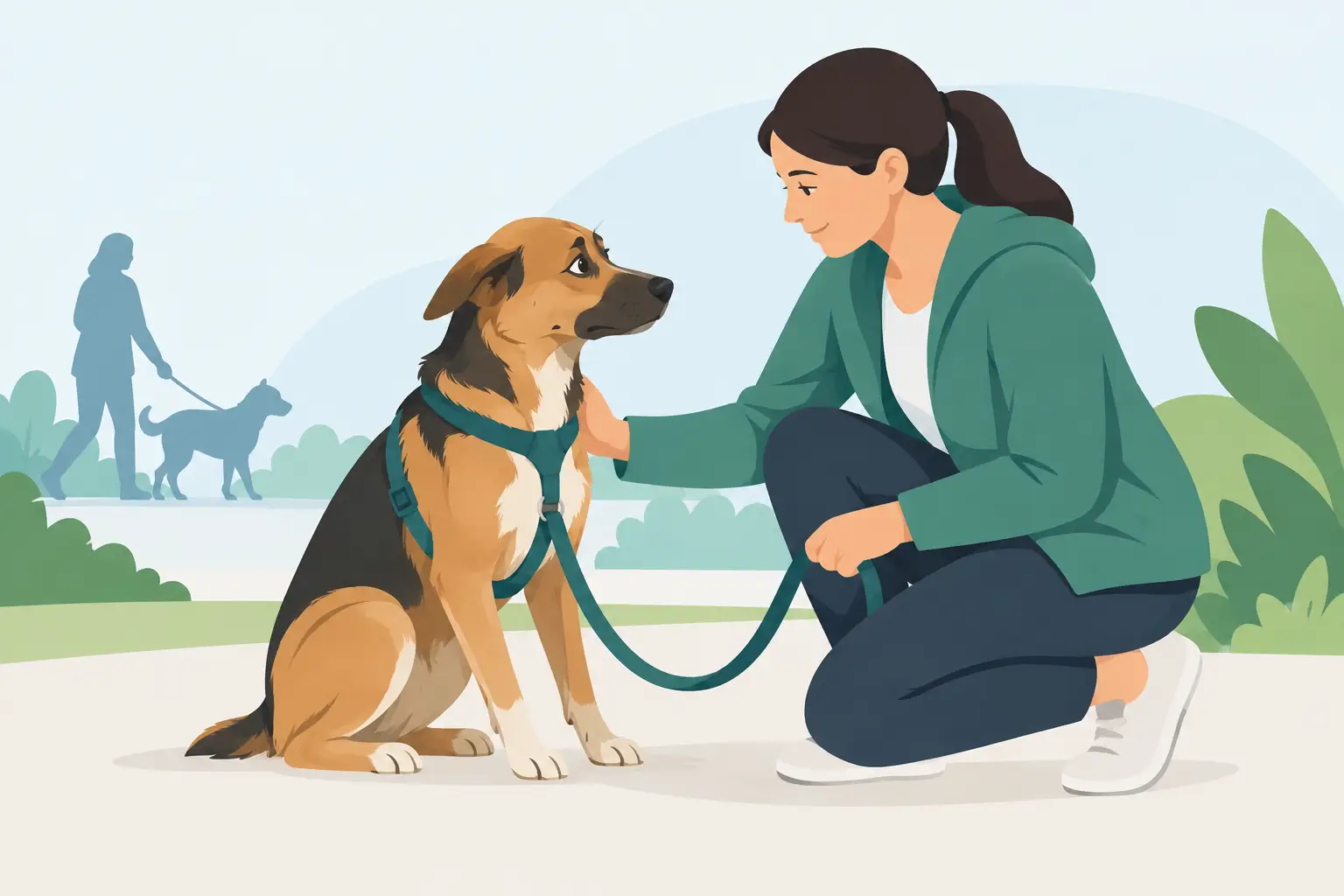
Look for someone who talks about observation, management, consent where possible and gradual progress. They should be able to explain how they will keep your dog under threshold - the point at which they can still notice their surroundings, take in information and respond to support. Once a dog is overwhelmed, learning is much harder. Creating distance is not failure. It is good handling.
Language can reveal a great deal. Be cautious if a provider focuses on being the ‘pack leader’, promising to fix your dog quickly, or describing anxious behaviour as defiance. Equally, no responsible professional should guarantee that reactivity will disappear. Behaviour can improve with the right support, but progress is rarely a straight line. Weather, health, changes at home, adolescence, a frightening encounter or simply an unusually busy day can all affect how a dog copes.
A good walker or behaviour professional will be honest about those variables. They will celebrate the small but meaningful changes: your dog recovering more quickly after seeing a trigger, choosing to look back at their handler, accepting food at a greater distance, or completing a calm five-minute walk when that once felt impossible.
Questions worth asking before you book
You deserve clear answers before handing over your dog’s lead. Ask how the provider assesses suitability, whether walks are solo or shared, how they prevent close encounters, and what happens if a trigger appears unexpectedly. It is reasonable to ask about qualifications, insurance, DBS checking and their experience with dogs whose needs resemble your own.
It is also useful to ask how communication works. Reactive-dog owners are often left worrying after a walk, particularly if their dog has had a difficult experience in the past. A dependable service should agree how updates will be shared and be honest if something has not gone to plan. A short, factual message about a route change or a stressful encounter can be reassuring when it comes with evidence that your dog was supported and given time to decompress.
Practical safeguarding matters too. Check that the business uses client agreements, keeps emergency contacts and veterinary information accessible, and has emergency veterinary authorisation in place. These details may sound administrative, but they show that a provider has considered how to act calmly and responsibly when plans change.
If your dog has bitten, redirected onto the lead, escaped equipment or become extremely distressed, say so. It can feel uncomfortable, especially if you have had judgement from others. Yet withholding that information makes safe planning harder. The right professional will listen without shaming you, explain what they can offer and, if necessary, recommend a different level of support or work alongside your vet and an appropriate clinical behaviour professional.
The trade-off between exercise and emotional safety
Many owners worry that their reactive dog is not getting enough exercise. It is an understandable concern, but more miles are not always better. A long walk filled with close passes, barking and constant vigilance can leave a dog more stressed than fulfilled. For some dogs, a quieter, shorter walk combined with sniffing, food enrichment, gentle play and proper rest is the better option.
This does not mean avoiding the outside world forever. It means choosing exposure carefully. A dog who feels safe enough to sniff, pause and take in their environment is often gaining more from a 20-minute outing than from an hour spent over their coping limit.
The balance depends on the dog. Young, energetic dogs may need creative outlets at home as well as carefully planned walks. Older dogs, dogs recovering from illness or dogs with pain may need a different routine again. A professional who understands behaviour will consider the whole dog, not just whether they have completed a set route.
Why consistency makes such a difference
Reactive dogs often benefit from predictability. Familiar handling, clear routines and a walker who notices their subtle signals can lower the pressure of everyday care. That is why a consistent service can be more valuable than a different person each day, even if a larger service appears more flexible on paper.
Consistency also helps the handler spot patterns. Perhaps your dog struggles more after poor sleep, on bin collection day, when school is finishing, or near a particular gate where dogs regularly bark. These observations allow walks to be adjusted before your dog is pushed too far. They are not excuses for behaviour. They are useful information.
At Hilltop Hounds, behaviour-led care is built around this kind of individual understanding. Led by a Level 4 Advanced Canine Behaviour qualified, PPGBI-accredited practitioner, the approach is force-free, organised and designed for dogs who need extra patience, including those who are reactive, anxious or fearful.
Choosing support that feels right for your dog
The best provider will not make you feel that your dog needs to be made ‘normal’ before they deserve good care. They will take the time to learn what safety looks like for your dog, put practical safeguards in place and communicate with you clearly.
Trust your observations as well as their credentials. After an initial meeting, ask yourself whether your dog was given space, whether the professional listened carefully and whether you felt able to speak honestly. The right support should leave both you and your dog feeling understood, with a plan that is kind enough to follow on the hard days as well as the good ones.

