



A dog who barks and lunges at the end of the lead is not necessarily being ‘naughty’. A dog who freezes near a busy road, hides when visitors arrive or cannot settle after a walk is not trying to make life difficult either. A canine behaviourist looks beyond the behaviour you can see to understand what a dog may be feeling, what triggers the response and what support will help them cope more comfortably.
For many owners, the biggest relief is realising that difficult behaviour is communication. It may be rooted in fear, frustration, anxiety, pain, overstimulation, past experiences or simply a dog being asked to cope with more than they can manage at that moment. Understanding the reason matters because the right support for one dog can be entirely wrong for another.
What is a canine behaviourist?
A canine behaviourist is a professional who studies dog behaviour and helps owners understand and respond to behavioural concerns. Their work is not about demanding obedience at all costs. It is about observing the dog in context, identifying patterns and creating practical, welfare-focused changes that make daily life safer and less stressful.
This can include support with reactivity towards dogs, people, vehicles or cyclists; fearfulness; separation-related worries; handling sensitivities; over-arousal; guarding; lead frustration; and difficulty settling. Behaviour support may also be helpful where a dog’s needs have changed after a move, a new baby, another pet joining the household or a frightening experience.
A good practitioner will avoid blaming either the dog or their owner. Living with a worried or reactive dog can be exhausting, especially when every walk feels unpredictable. You deserve clear guidance, and your dog deserves a plan that respects their limits.
Behaviour is more than the moment it happens
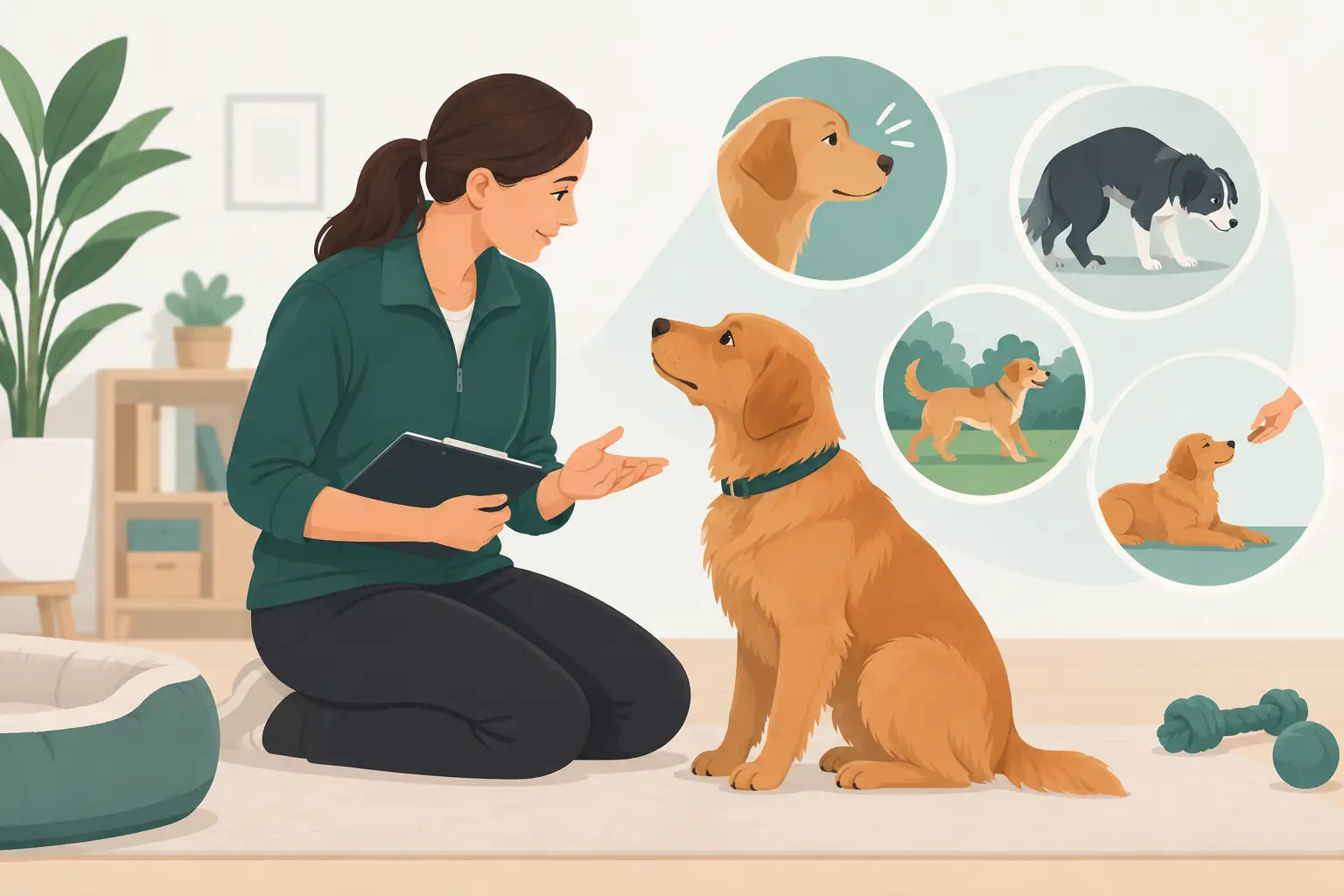
It is easy to focus on the visible event: the bark at another dog, the snapped lead, the refusal to leave the house. Yet that moment is usually only part of the story. A behaviourist considers what happened beforehand, how close the trigger was, whether the dog had enough space to move away, and what happened afterwards.
For example, a dog who reacts when another dog approaches may be trying to create distance. If barking causes the other dog to pass by, the barking may become more likely next time because, from that dog’s perspective, it worked. Punishing the bark might suppress a warning signal without changing the worry that caused it. In some cases, that can leave a dog feeling even less safe.
This is why force-free, reward-based work is so valuable. It focuses on helping dogs feel safer and teaching workable alternatives, rather than using fear, pain or intimidation to stop an outward behaviour. Progress is not always a perfectly silent dog. Sometimes progress is a dog noticing a trigger at a greater distance, choosing to look back at their owner, or recovering more quickly after a surprise.
When should you seek help from a canine behaviourist?
You do not have to wait for a serious incident before asking for support. Early help can prevent worries becoming more established and can make routines easier for everyone. It is sensible to seek professional guidance if your dog’s behaviour is changing suddenly, if you feel anxious before walks, or if you are regularly avoiding situations because you are unsure how your dog will cope.
A qualified behaviour professional can also be useful before a predictable challenge. Perhaps you are welcoming a rescue dog, moving home, introducing a baby, changing work patterns or preparing for a busy holiday period. Planning ahead gives you more options than trying to solve a problem after everyone is already overwhelmed.
If a behaviour change is sudden, pronounced or accompanied by signs of discomfort, speak to your vet first. Pain, illness and hormonal changes can affect behaviour, and a responsible behaviour plan should take physical health into account. Behaviour work and veterinary care often sit alongside one another rather than competing.
What does behaviour-led dog care look like?
Behaviour-led care brings the same thoughtful approach into a dog’s everyday routine. This is particularly important for dogs whose owners need reliable daytime help but worry that a standard group walk may be too much for their dog.
The process should begin before the first walk. A detailed intake allows the carer to learn about your dog’s health, routine, food, equipment, handling preferences, triggers, safe walking locations and emergency contacts. It is also an opportunity for you to explain the small details that make a real difference, such as whether your dog needs a little time before accepting a lead, dislikes being touched around the collar, or becomes unsettled by unfamiliar men.
That information should shape the care provided. One dog may enjoy a calm sniffing walk at quieter times of day. Another may need solo exercise, a wider distance from other dogs or a predictable route. A third may be happiest with gentle enrichment and short outdoor breaks while confidence is built gradually. There is no prize for making a dog cope with a busier walk than they are ready for.
At Hilltop Hounds, this approach is led by James Grant, a PPGBI-accredited canine behaviourist with over 15 years of experience and a Level 4 Advanced Canine Behaviour qualification. His force-free work is informed by an understanding that anxious, fearful and reactive dogs often need patience, consistency and careful observation rather than a one-size-fits-all routine.
Qualifications, methods and questions worth asking
The terms ‘dog trainer’ and ‘behaviourist’ are used widely, and experience levels can vary. Before choosing someone to support your dog, ask about their qualifications, ongoing learning, methods and insurance. You are trusting them with a family member, often at a vulnerable point in their life, so it is reasonable to want straightforward answers.
Ask how they approach barking, lunging or fear. Be cautious of anyone who guarantees a quick fix, labels dogs as dominant, or relies on equipment and techniques intended to startle, scare or cause discomfort. Behaviour change takes time because feelings take time to change. A professional should be honest about that while still offering practical, manageable steps.
It is also worth asking how a walker or behaviour practitioner assesses suitability for their service. Not every dog will thrive in every setting, and an ethical provider will say so. A dog who finds groups stressful may need individual care. A dog with a history of bites may need specialist management and a carefully agreed plan. Matching the care to the dog is a sign of professionalism, not rejection.
Why consistency matters between walks
A behaviour plan works best when the people around the dog share a clear approach. This does not mean your household must become perfect overnight. It means agreeing on a few realistic habits: allowing your dog space from triggers, using the same cue words, avoiding situations they cannot yet handle and rewarding calm choices when they occur.
For busy households, reliable communication is part of that consistency. A professional carer should keep accurate dog information, work within agreed terms and have clear emergency veterinary authorisation in place. These processes may sound administrative, but they protect your dog when decisions need to be made quickly. Being fully insured and DBS checked offers further reassurance that care is being delivered responsibly.
A neurodivergent-led approach can bring particular care to observation, routine and sensory needs. Dogs do not experience the world in the same way we do, and some are especially affected by noise, movement, proximity and unexpected change. Paying attention to those details can turn a stressful outing into one a dog can manage with growing confidence.
Progress should feel kinder, not harsher
There will be good days and harder days. Weather, sleep, visitors, nearby building work, a surprise off-lead dog or simply a run of busy weeks can affect how much a dog can cope with. Setbacks do not erase progress. They are useful information about what your dog needs next.
The aim of working with a canine behaviourist is not to create a dog who never has feelings or needs. It is to give them safer ways to cope, while giving you the knowledge and support to advocate for them. With patient, force-free care and a plan built around the individual dog, daily life can begin to feel calmer for both ends of the lead.

