The first handover can set the tone for every walk that follows. If you are wondering how to introduce your dog to a walker, the aim is not to make them instantly best friends. It is to help your dog feel safe, understood and able to build trust at their own pace.
For some dogs, a new walker is simply an exciting new person. For others, particularly dogs who are anxious, fearful or reactive, the change can feel significant. A thoughtful introduction protects your dog’s wellbeing and gives the walker the information they need to provide calm, dependable care.
How to introduce your dog to a walker calmly
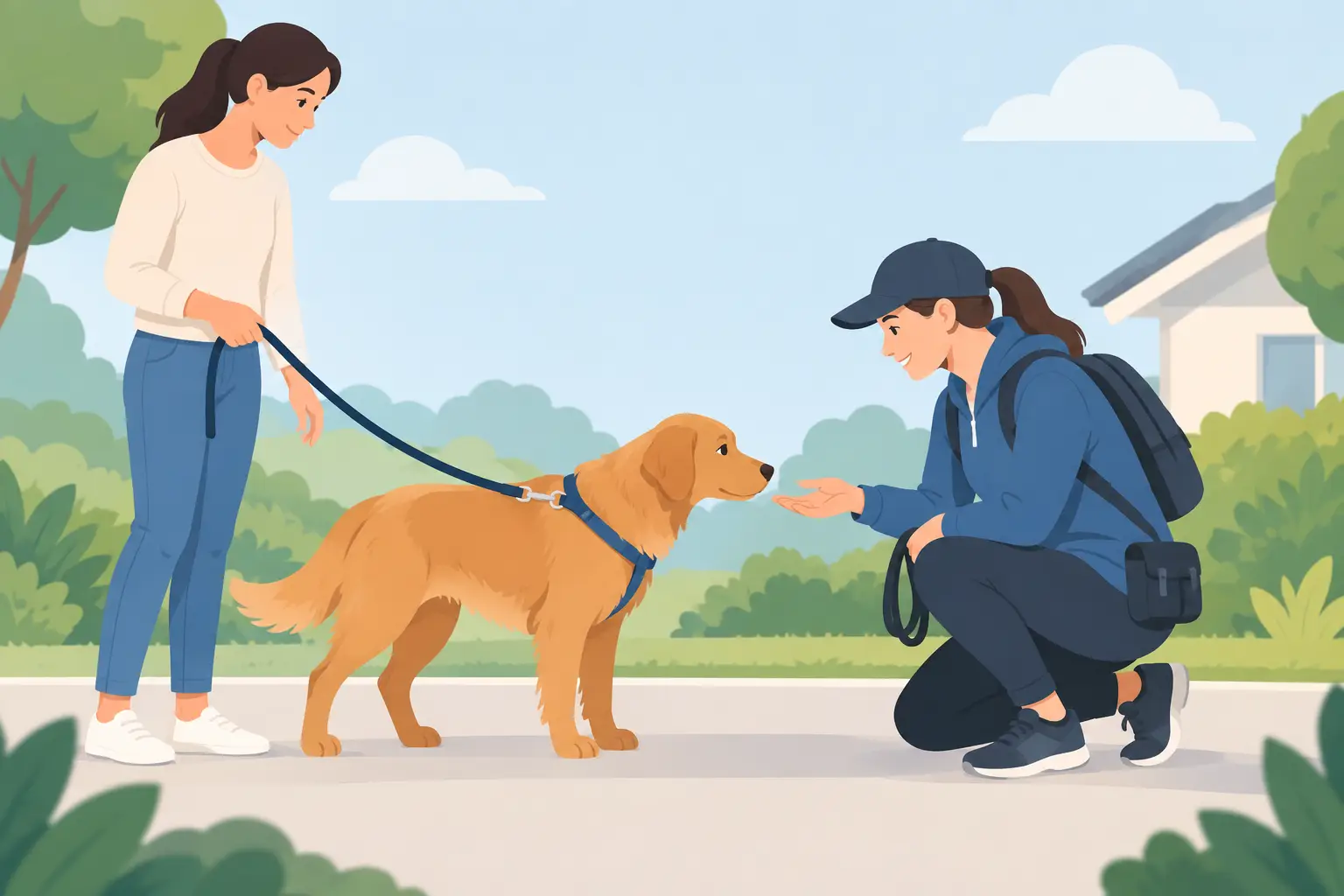
Start by choosing a quiet time and location. A busy pavement, crowded park or doorstep full of rushing activity can make a first meeting harder than it needs to be. If possible, meet somewhere your dog already knows well, with enough space for them to move away rather than feel cornered.
Your walker should initially give your dog plenty of choice. That may mean standing at an angle rather than facing them directly, avoiding prolonged eye contact and allowing the dog to approach in their own time. There is no need for a new person to reach over your dog’s head, ask for a sit, or try to stroke them straight away.
Keep the lead loose where it is safe to do so. A tight lead can add pressure and make it difficult for a worried dog to use their natural calming signals. If your dog prefers distance, distance is useful information, not a problem to push through.
A force-free introduction may look uneventful from the outside. That is often a good sign. Your dog might sniff the ground, look at the walker briefly, take a treat you have placed on the floor or choose to stand near you. These small choices are the beginning of trust.
Share the details that make your dog feel safe
A responsible dog walker needs more than a name, feeding time and emergency contact number. Your dog’s individual history, routines and preferences matter. Honest information allows the walker to plan appropriately rather than make assumptions during a walk.
Before the first session, talk through your dog’s normal behaviour around people, dogs, traffic and unfamiliar sounds. Explain what they enjoy, what worries them and how they show that they need a break. It can also help to share the words and cues you use at home, the value of different treats, and whether they are comfortable being touched around their harness, collar or paws.
Be especially clear about the following:
- known triggers, such as scooters, other dogs, men in hats, busy roads or sudden noises
- handling preferences, including whether your dog is happy with lead changes, towel drying or having a harness fitted
- medical needs, dietary restrictions and any signs that mean a walk should be shortened or avoided
- safe routes, escape risks and the practical set-up you use, such as a double-ended lead or secure harness
There is no judgement in this conversation. Dogs do not need to be perfectly social or easy-going to deserve excellent care. In fact, the clearer you are, the more confidently a behaviour-led walker can support them.
At Hilltop Hounds, this individual understanding is built into the dog-intake process, alongside client agreements and emergency veterinary authorisation. It means care is organised before a dog ever leaves home, rather than being improvised when something goes wrong.
Let the first walk be short and successful
Once your dog is comfortable enough to be near the walker, consider a short walk together. You can begin by walking alongside the pair for a few minutes, then allow the walker to take the lead while you remain nearby. For a confident dog, this may be all that is needed before the first solo walk. For a more cautious dog, repeat this stage over several meetings.
It helps if the walker uses the same calm, reward-based approach you use at home. Treats can create a positive association, but they should never be used to lure a frightened dog into an interaction they are not ready for. Tossing a treat away from the walker can be more helpful than offering one from the hand, because it gives the dog space to eat and decide what happens next.
Keep the first solo outing modest. A familiar, low-pressure route is usually better than an ambitious long walk in a stimulating environment. The goal is not to tire your dog out at all costs. It is to return them home feeling safe, settled and ready to see their walker again.
This is one area where it depends on the dog. An energetic, sociable Labrador may be happy to head out after a brief hello. A fearful rescue dog may need several quiet visits at home before walking with a new person feels possible. Neither response is wrong.
Watch your dog’s body language
Dogs communicate discomfort well before they growl, bark or try to move away. A good walker will pay attention to subtle changes, and owners can help by explaining their dog’s early signals.
Signs your dog may need more space include turning their head away, lip licking when there is no food present, yawning, freezing, showing the whites of their eyes, holding their tail low or repeatedly trying to move behind you. A dog who becomes suddenly bouncy, grabs the lead or cannot settle may also be overwhelmed rather than simply excited.
If you see these signs, slow down. Ask the walker to step back, reduce expectations and finish on a calmer note. Forcing the interaction can make the next meeting more difficult. Giving your dog time teaches them that their communication is heard.
Make handovers predictable
Dogs often cope better when the routine stays the same. Once your dog and walker are getting to know one another, agree a simple handover pattern. Perhaps the walker arrives, waits quietly while you fit the harness, and takes your dog out after a brief check-in. Or perhaps your dog is more relaxed when the walker lets themselves in after an established routine.
Consistency is useful, but it should not become rigid. Some dogs are fine with one familiar walker but struggle if the time of day changes, the weather is wild or there are builders working nearby. Let your walker know about unusual circumstances, changes in medication, a disrupted night or any stressful event at home. These details can explain why a normally confident dog needs an easier day.
Clear processes also support safety. Your walker should have current contact details, veterinary information, agreed permissions and clear instructions for emergencies. You should know how updates will be shared and what happens if your dog appears unwell, becomes distressed or cannot be safely walked that day. This is not unnecessary paperwork. It is part of looking after a family member responsibly.
Give the relationship time to grow
After each early walk, ask for a straightforward update. How did your dog greet the walker? Were they keen to leave? Did they eat treats, toilet normally and settle on the route? Did anything make them hesitate? Short, honest feedback helps everyone adjust the plan.
Avoid judging progress only by whether your dog looks wildly excited at the door. A calm dog who can see their walker arrive, take a breath and walk out comfortably is doing very well. Trust can be quiet.
For dogs with reactivity, anxiety or a history of fear, progress may include choosing to take a treat near the walker, recovering more quickly after a noise, or completing a short route without going over threshold. Those are meaningful wins. A qualified, force-free professional can adapt the pace, walking environment and handling plan around the dog in front of them.
The kindest introduction is one that lets your dog have a say. With patience, clear information and a walker who notices the small things, a new routine can become one of the safest and happiest parts of their week.

